
The Complete Guide to Spray Foam Insulation in the Lowcountry: Cost, Benefits, and What to Expect in 2026
If you live in Bluffton, Charleston, Beaufort, Summerville, Goose Creek, or anywhere along the South Carolina Lowcountry corridor, insulation is not just about temperature.
The South Carolina Lowcountry presents unique challenges for home insulation:
high year-round humidity, long cooling seasons, salt air, elevated water tables, frequent vented crawl spaces, and the risk of moisture-related issues such as mold and musty odors. Traditional fibrous insulation (fiberglass or cellulose) often underperforms in these conditions because it does not adequately stop air movement that carries humid outdoor air indoors (Atlantic Spray Foam Lowcountry Guide, 2025–2026; Lowcountry Style & Living, 2026).
Spray foam insulation (spray polyurethane foam, or SPF) expands to fill gaps, cracks, and voids. It provides both thermal insulation and air sealing in one application, making it particularly well-suited to this humid subtropical climate. Most of the Lowcountry falls in IECC Climate Zone 3A (warm-humid), with some coastal influence toward Zone 2A characteristics (U.S. Department of Energy Building America / PNNL Climate Zone Guide by County, 2021–2022 updates; Autohvac Climate Zones for South Carolina).
This practical guide walks you through the essential information you need to make a confident, informed decision about spray foam insulation for your Lowcountry home.


Author Bio
TJ Anderson, with the support of his wife Rachel, started in the spray foam insulation business in 2004 in Statesboro, Georgia. In 2008, TJ and Rachel moved to Bluffton, South Carolina to further his career in the South Carolina market. TJ is an avid member of the Home Builders Association and Bluffton Hilton Head Chamber of Commerce. He also serves on the board for the HBA. TJ and his family attend LowCountry Community Church in Bluffton.
What Is Spray Foam Insulation?
Spray foam is a two-component system (isocyanate + polyol resin) mixed at the spray gun tip. It expands on contact, adheres to surfaces, and cures into a rigid or semi-rigid foam that seals the building envelope.
Two main types used in the Lowcountry (values aligned with ASTM C1029 classifications and aged R-value testing standards):
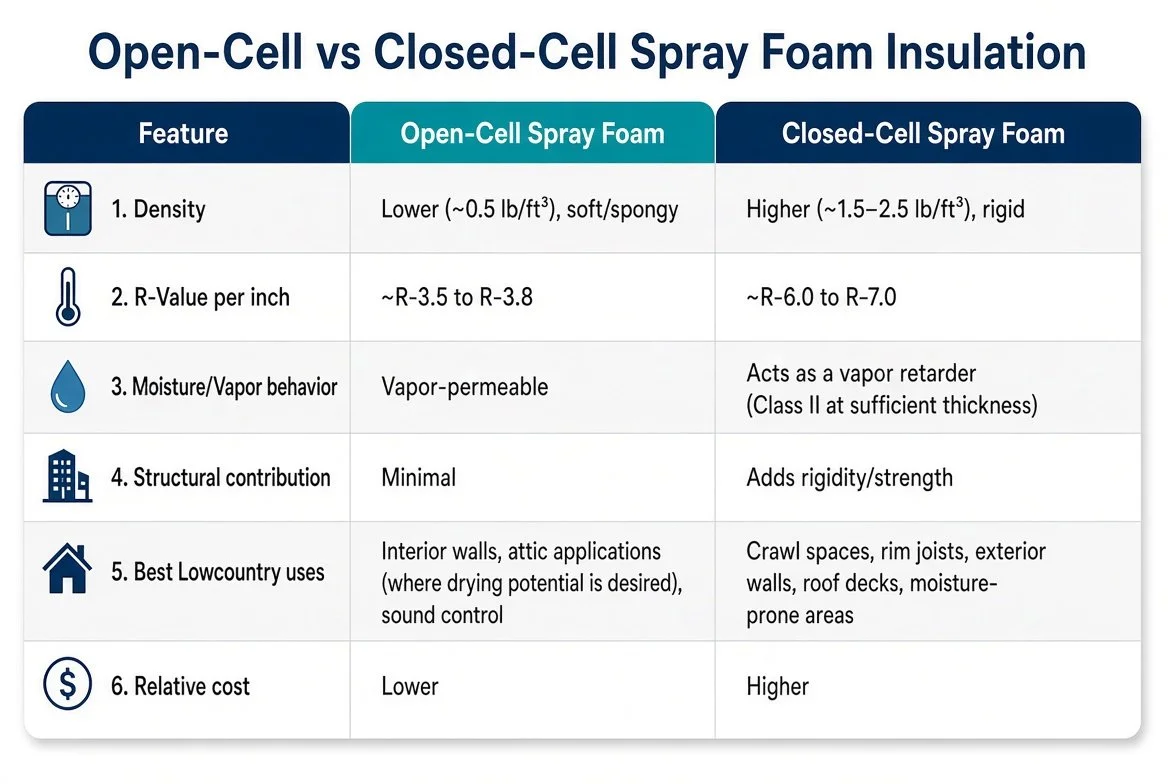
Closed-cell is frequently preferred for crawl spaces, rim joists, and areas exposed to high moisture or potential bulk water in coastal and Lowcountry homes. Open-cell can be cost-effective for certain attic or interior applications when properly detailed for the climate. Hybrid approaches are also common.
Why Spray Foam Excels in the Lowcountry Climate
These advantages are especially relevant for elevated foundations, historic homes with complex framing, waterfront properties facing salt air, and homes with chronic humidity or musty odors.

Humidity and moisture control:
A significant portion of indoor air in many Lowcountry homes originates from the crawl space. Spray foam reduces air infiltration that carries humid outdoor air, limiting condensation inside wall and roof cavities—a primary driver of mold and mildew in coastal environments.

Comfort and indoor air quality:
More even temperatures, fewer drafts, reduced outdoor allergens and pollutants entering, and often quieter interiors.

Air sealing:
Unlike fiberglass batts, which do not stop air movement, spray foam seals cracks, gaps, penetrations, and irregular cavities. Uncontrolled air movement is a major driver of moisture problems in humid regions.

Energy performance in long cooling seasons:
Lowcountry summers are extended and humid. Properly installed spray foam can significantly reduce HVAC runtime and energy use. Field reports and contractor data commonly cite savings in the 30–50% range on heating and cooling costs (actual results vary by home, existing conditions, and system efficiency).

Mold and pest resistance:
The material itself offers little food value to fungi or insects. By controlling condensation and air leakage, it helps reduce conditions that support mold growth.

Durability:
Does not settle or sag like many traditional materials. Closed-cell can also contribute modest structural rigidity.
2026 Cost Expectations in the Lowcountry
Installed prices vary by foam type, thickness (to meet target R-values), access, removal of existing insulation, moisture remediation, historic-home constraints, and job size. Local market data from Charleston and nearby Lowcountry areas (late 2025–mid 2026) commonly show:
-
(always obtain site-specific quotes):
1,000–1,200 sq ft attic with open-cell: often $1,200–$2,600 depending on thickness and prep.
Same area with closed-cell: frequently $1,800–$3,000+.
Crawl-space or rim-joist work is typically scoped by linear feet or project complexity and may include encapsulation elements.
Whole-house or difficult-access/historic projects cost more due to labor, scaffolding, and prep.
Smaller jobs carry higher per-square-foot costs due to mobilization.
Additional Lowcountry cost drivers include prep for salt-damaged materials near the water, high-humidity summer work conditions, and any required moisture or mold remediation before installation. New construction is generally more efficient (and lower cost per square foot) than retrofits. Multiple on-site assessments are essential—estimates without inspection are unreliable.
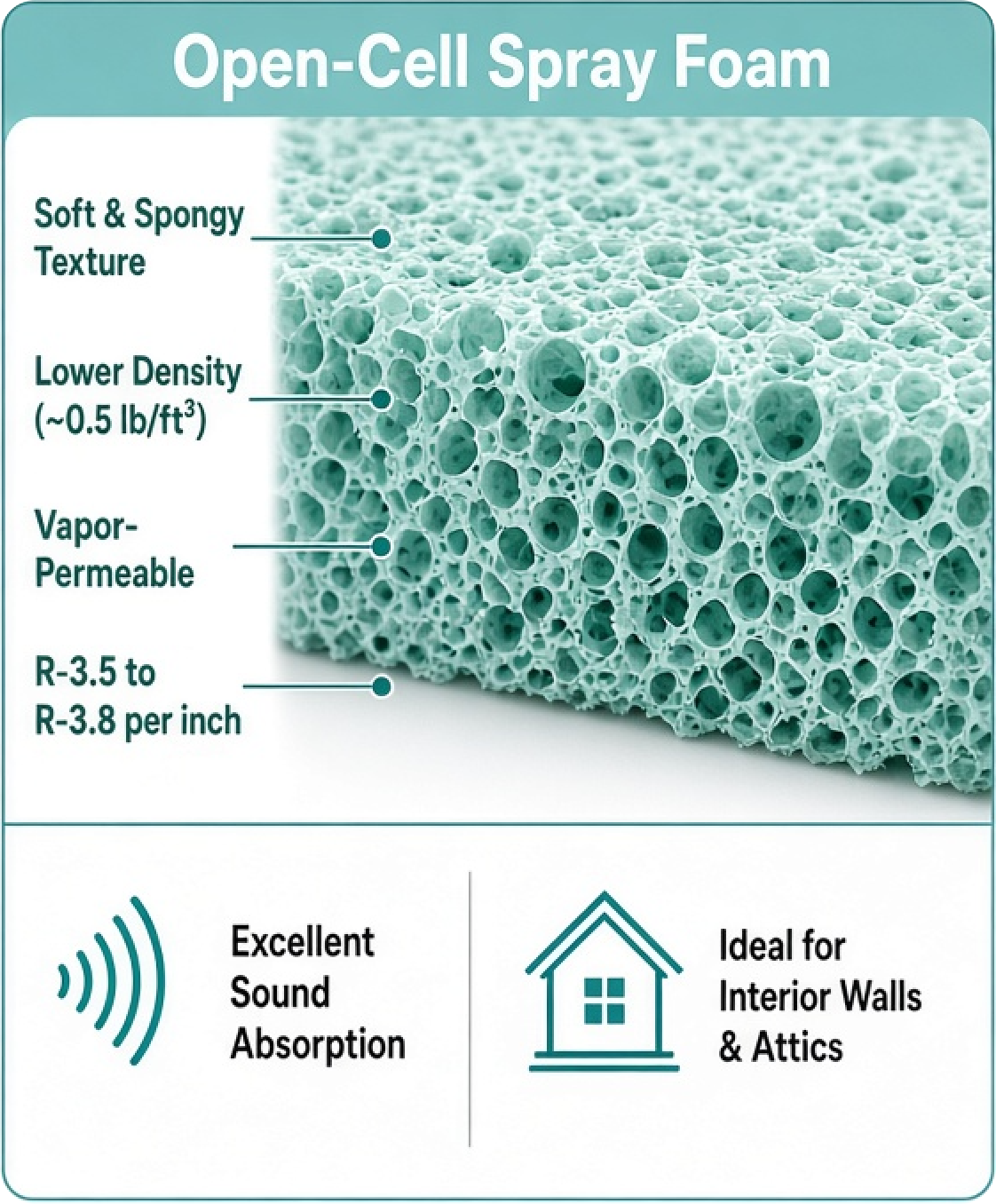
Open-cell:
Roughly $1.20–$1.80 per square foot installed (depending on depth and application).
Potential offsets in 2026:
South Carolina Home Energy Rebate
programs (HOMES and HEAR, funded via the federal Inflation Reduction Act): Anticipated to launch in 2026. These may support insulation and air sealing among other measures; amounts can range from a few thousand dollars depending on energy savings achieved and household income. Check energy.sc.gov for current status (programs were still in development as of mid-2026).
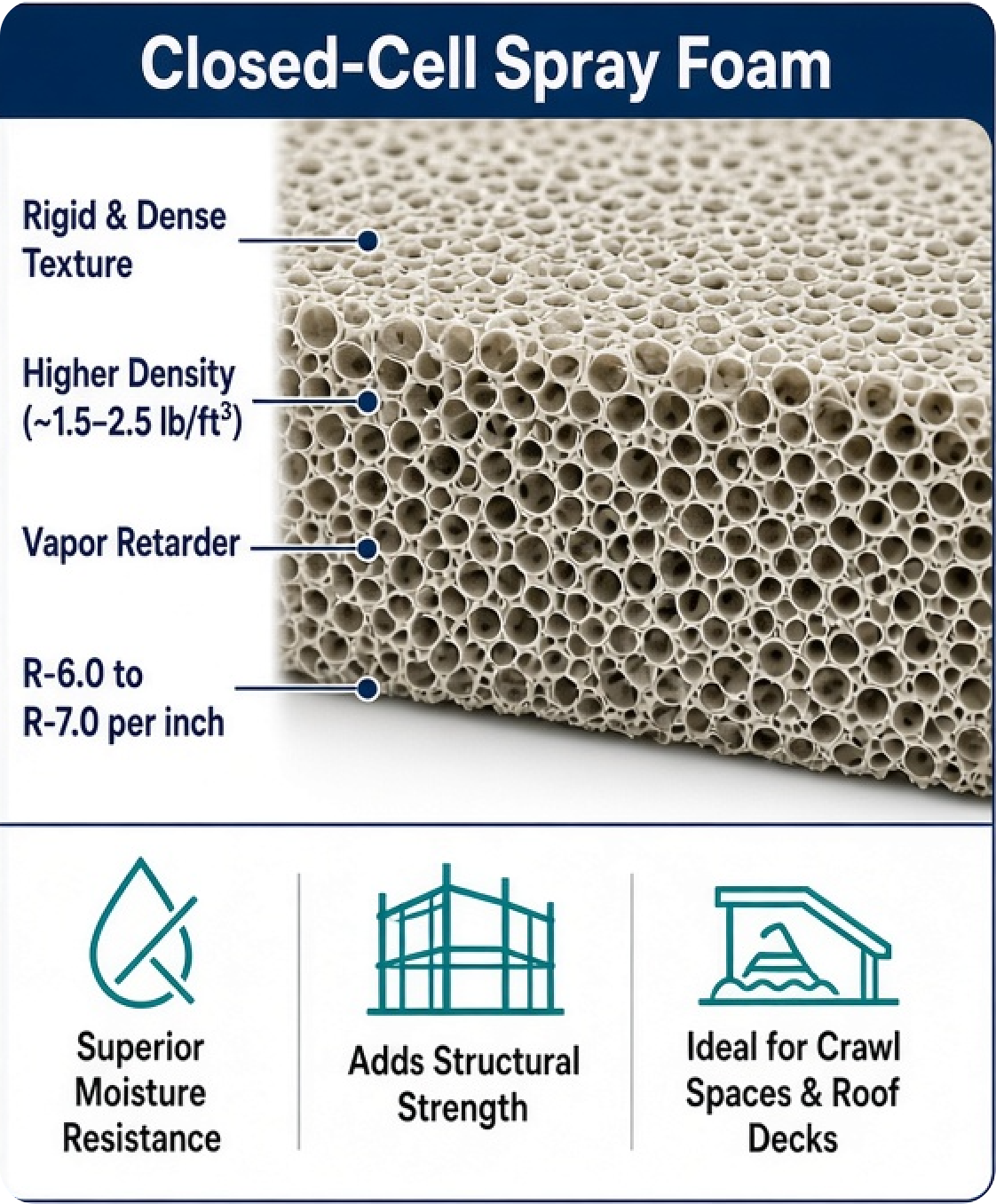
Closed-cell:
Roughly $1.80–$2.50+ per square foot installed.
Claim your fee $200 now!
Get this $200 deal in three easy steps:
Call our office at the number listed on our site or message us through the contact form to request a free consultation.
Mention the "$200 Deal" when booking — we’ll confirm eligibility for your location (Bluffton, Beaufort, Hilton Head, Charleston, or Savannah) and schedule an appointment.
Offer valid for new customers and subject to availability and standard terms. Only one per customer and not valid for customers already under contract. Ask about combination savings with energy-efficiency upgrades. For immediate help, call during business hours and mention the $200 Deal.

Duke Energy Smart $aver
(eligible Carolinas/Progress customers): Up to $700 for qualifying attic insulation and air sealing (eligibility rules apply, including existing R-value limits and leakage reduction; work with participating contractors). Duct-sealing rebates may also be available.
Where Spray Foam Is Commonly Applied in Lowcountry Homes
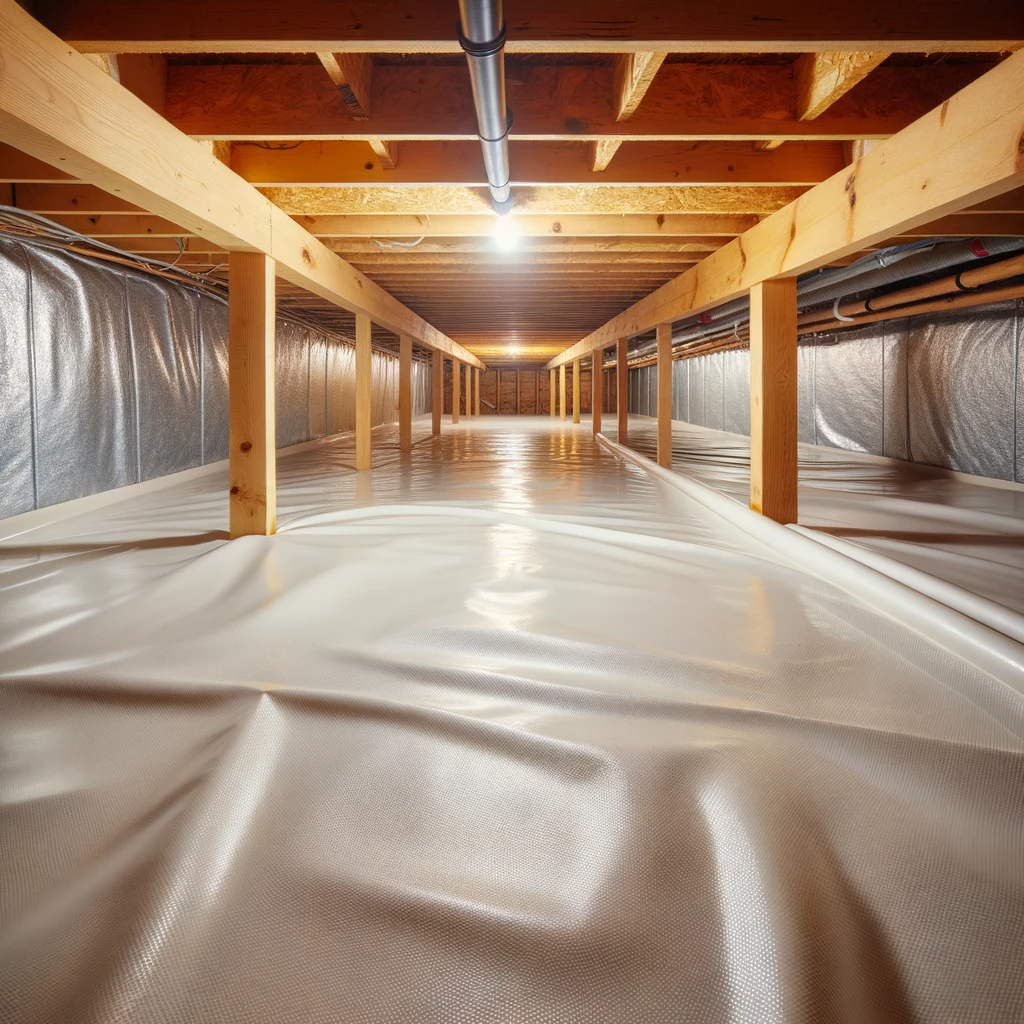
Crawl spaces:
Critical for humidity control. Often paired with vapor barriers, drainage, and encapsulation.
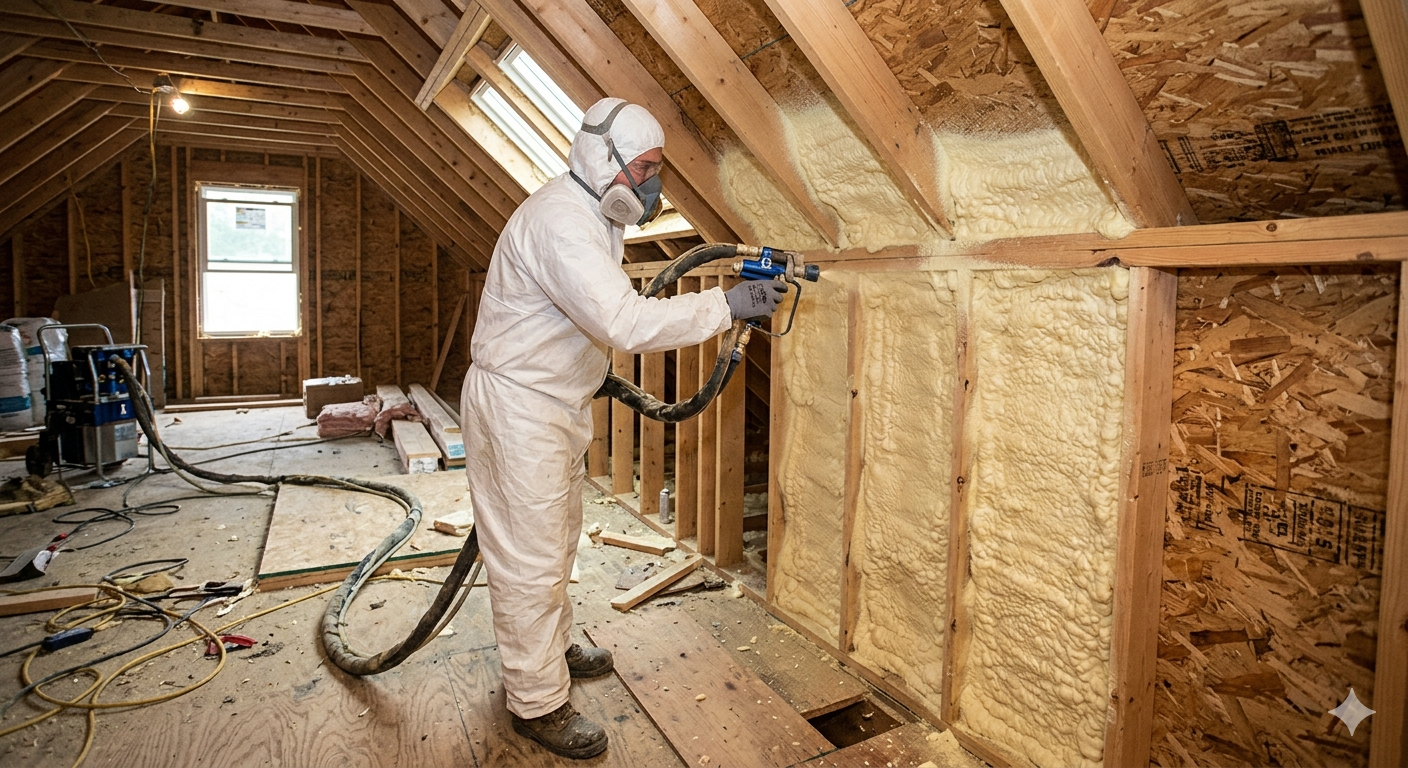
Attics and roof decks:
Creates conditioned (unvented) attics that reduce heat gain and protect HVAC equipment located there. Attic temperaturesA in the region can routinely exceed 130°F+.

Exterior wall cavities
(especially new construction or gut rehabs).

Rim joists and band boards:
High-leakage, moisture-prone zones.

Cathedral ceilings,
garage-to-living conversions, and commercial/agricultural buildings where humidity control and consistent temperatures matter.
What to Expect During Installation (2026 Process)
Consultation and assessment: On-site evaluation of moisture, existing insulation, access, R-value needs, and recommendation of open- vs. closed-cell (or hybrid). Expect discussion of ventilation implications if converting a vented attic or crawl space.
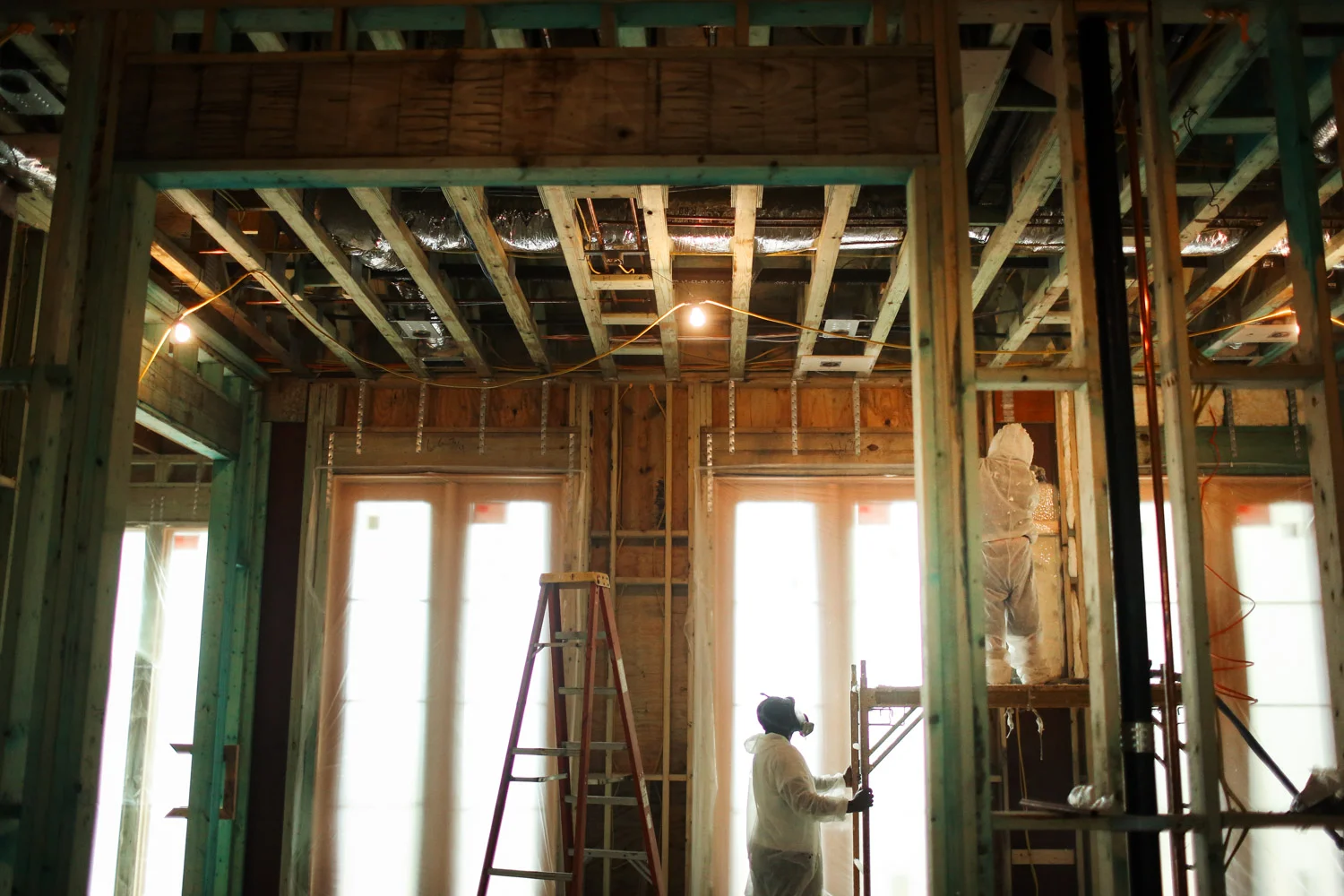
Preparation: Clear the work area of belongings. Crews mask/protect surfaces, set up containment and ventilation, and remove old or damaged insulation if needed. Substrate must be clean and dry.
Application: Technicians in full protective gear use specialized heated high-pressure equipment. Foam is applied in controlled “lifts” (layers) to manage expansion, heat from the chemical reaction, and consistent thickness. Noise from equipment is normal; some odor occurs during spraying.
Curing and re-entry: Foam becomes tack-free quickly but needs time to fully cure and for any off-gassing to dissipate. Guidelines commonly include temporary ventilation and restricted re-entry (often 24 hours for open-cell with good ventilation; shorter windows—sometimes a few hours—for closed-cell, depending on product, thickness, and conditions). Follow the specific contractor and manufacturer instructions. Pets, children, and occupants should stay out of the active work zone.
Cleanup, inspection, and documentation: Excess foam is trimmed where needed. Quality checks confirm coverage and thickness. Most attic or crawl-space residential jobs finish in one day; larger or multi-area projects may take longer.
Professional, experienced installers familiar with coastal humidity, historic homes, and local codes are essential. Improper application (wrong type, inadequate thickness, poor surface prep, or incorrect ventilation detailing) can lead to performance or moisture issues.
Is It Worth It in 2026?
For many Lowcountry homes dealing with high humidity, elevated energy bills, uneven temperatures, musty odors, or crawl-space problems, yes—particularly when closed-cell or hybrid systems address moisture alongside thermal performance. Benefits compound over time through energy savings, improved comfort and air quality, reduced mold risk, and durability. Payback periods commonly fall in the range of several years depending on energy rates, usage, and incentives, after which the ongoing savings continue.
It is not a universal solution for every situation (e.g., severe structural moisture problems must be fixed first; flood-zone considerations may require additional detailing). Pair it with good overall building-science practices: proper ventilation where needed, HVAC sizing for a tighter envelope, and attention to drainage and foundations.
Choosing a Contractor
Selecting the right contractor is one of the most important decisions you’ll make. Look for licensed and insured installers who have real experience working in the Lowcountry’s humid coastal climate. They should understand moisture management, climate-zone detailing, and the specific challenges of elevated foundations, historic homes, and salt-air exposure. Choose companies that provide clear, on-site quotes and are willing to explain the differences between open-cell and closed-cell spray foam so you can make an informed choice. Ask about product warranties, manufacturer certifications, and examples of completed local projects.
One established local option that specializes in Lowcountry conditions is Atlantic Spray Foam. They have years of experience installing spray foam throughout Charleston, Bluffton, Beaufort, and the surrounding coastal areas, with a focus on humidity control and moisture management tailored to this climate.

-
Costs (Charleston / Lowcountry area, 2025–2026)
https://www.homeyou.com/sc/spray-foam-insulation-charleston-costs
https://amfoamsolutions.com/locations/south-carolina/charleston/
https://buildx.pro/costs/city/charleston/closed-cell-spray-insulation
https://www.manta.com/cost-spray-foam-insulation-charleston-sc
https://amfoamsolutions.com/locations/south-carolina/saint-george/ (and similar pages for nearby SC locations showing consistent $1.20–$1.80 open-cell / $1.80–$2.50 closed-cell ranges)
Benefits, Climate Suitability & Lowcountry-Specific Guidance
https://lowcountrystyleandliving.com/why-lowcountry-homes-need-spray-foam-before-hurricane-season/
https://www.insulmaxxspf.com/post/the-benefits-of-spray-foam-insulation-in-myrtle-beach-sc
Open-Cell vs. Closed-Cell Comparison
https://www.carolinaenergyconservation.com/spray-foam-insulation/choosing-spray-foam-insulation.html
https://rainyroofers.com/open-cell-vs-closed-cell-spray-foam/
https://raleighexcelsprayfoam.com/open-vs-closed-cell-insulation-raleigh-nc/
Climate Zone (IECC) for South Carolina / Lowcountry
Supporting IECC/Building America references confirming Zone 3A (warm-humid) dominance for most of the Lowcountry, with some coastal influence toward Zone 2A characteristics.
Incentives & Rebates (2026)
https://energy.sc.gov/rebates (South Carolina Home Energy Rebates / HOMES & HEAR status)
https://www.duke-energy.com/home/products/smart-saver/insulate-and-seal?jur=SC01 (Duke Energy Smart $aver attic insulation & air sealing rebate details)
https://programs.dsireusa.org/system/program/detail/3605 (Duke Energy residential efficiency program overview)
Installation Process / What to Expect
Ready to Protect Your Lowcountry Home from Humidity and High Energy Bills?
Spray foam insulation works best when it is specified and installed by a team that truly understands coastal South Carolina conditions—high humidity, salt air, elevated foundations, and the unique challenges of Charleston, Bluffton, Beaufort, and the surrounding Lowcountry.
Atlantic Spray Foam specializes in exactly that. With years of local experience, they focus on moisture control, proper open-cell vs. closed-cell selection, and long-term performance in our climate.
Take the next step today:
Get a clear, no-obligation assessment tailored to your home
Learn which spray foam solution is right for your crawl space, attic, or whole-house project