
What Is Spray Foam Insulation, How Does It Work, and Is It Better Than Fiberglass?
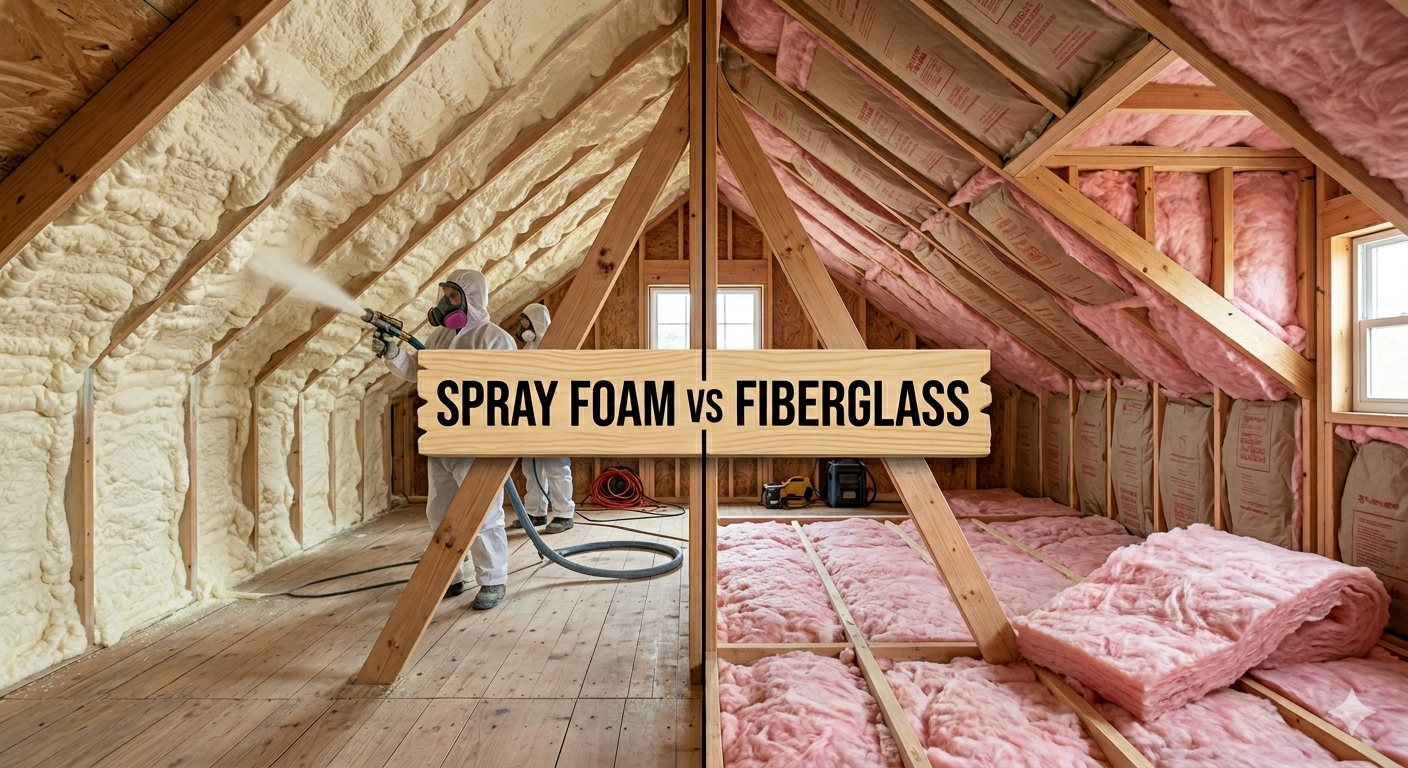
Spray foam insulation or spray polyurethane foam (SPF), is a two-component material applied as a liquid that expands into a solid foam. expands to seal air leaks, delivers higher R-value per inch, and controls moisture better than fiberglass for a more efficient, durable home.
Types of Sprayfoam Insulation
Spray foam is installed on-site using specialized equipment that mixes two heated components at the point of application. These materials react immediately, expanding and curing into foam.
There are two primary types:
Open-Cell Spray Foam
Lower density and softer texture
Expands more to fill irregular spaces
Typically used in interior applications
Closed-Cell Spray Foam
Higher density and rigidity
Higher R-value per inch
Acts as an air barrier and helps resist moisture
According to Building Science Corporation, controlling air movement through building assemblies is one of the most critical factors in managing moisture and long-term durability. Closed-cell spray foam directly addresses this by limiting both air and moisture intrusion.
Spray Foam vs Fiberglass: Key Differences That Matter
1. Air Sealing Performance
Fiberglass insulation slows heat transfer, but it does not stop air movement.
Spray foam does both.
According to the U.S. Department of Energy, air leakage can account for a significant portion of a home’s energy loss, and sealing gaps and cracks is essential to improving efficiency.
Spray foam creates a continuous air barrier, reducing drafts and uncontrolled airflow throughout the home.
2. R-Value Per Inch
R-value measures how well insulation resists heat flow.
Closed-cell spray foam provides a higher R-value per inch than fiberglass, meaning it delivers more insulation in less space.
According to the Spray Polyurethane Foam Alliance, this makes spray foam particularly effective in tight assemblies where maximizing performance is critical.
3. Moisture and Humidity Control
In coastal climates like Bluffton, Charleston, and the greater Lowcountry, moisture control is just as important as temperature control.
Fiberglass:
Can absorb moisture
Loses effectiveness when wet
Can contribute to mold conditions
Spray foam:
Resists moisture intrusion
Reduces condensation risk
Helps stabilize indoor humidity
This matters because moisture does not just stay outside. In many homes, a large portion of indoor air originates from below.
More than 50% of the air you breathe inside your home can come from the crawl space, bringing humidity, mold spores, and odors with it .
Spray foam’s air-sealing properties help block that pathway.
4. Durability and Long-Term Performance
Fiberglass insulation can:
Sag over time
Shift out of place
Lose effectiveness
Spray foam:
Bonds directly to surfaces
Maintains its shape and position
Does not settle or compress
According to NAHB Research Center, insulation performance over time is directly tied to proper installation and material stability. Spray foam’s adhesive and rigid properties contribute to long-term consistency.
5. Energy Efficiency and Comfort
Spray foam helps create a tighter building envelope, which leads to:
More consistent indoor temperatures
Reduced HVAC workload
Improved overall comfort
According to ENERGY STAR, properly sealing and insulating a home can significantly improve energy performance while enhancing comfort year-round.
In many cases, spray foam systems can contribute to substantial energy savings depending on the structure and installation quality .
Tradeoffs to Consider
Spray foam is a premium solution, and it comes with considerations:
Cost
Spray foam typically has a higher upfront cost than fiberglass insulation.
Installation Quality
According to the Spray Polyurethane Foam Alliance, proper installation is critical. Temperature, mixing ratios, and application thickness all impact performance.
Product Selection
Choosing between open-cell and closed-cell depends on:
Climate
Building design
Budget
When Should You Choose Spray Foam?
Spray foam is often the better choice when:
Air sealing is a priority
You are building or renovating in a humid climate
Long-term performance matters more than upfront cost
You want improved indoor air quality and comfort
Fiberglass may still be appropriate when:
Budget is the primary concern
A removable or non-permanent solution is preferred
Final Thought: Why This Matters in the Lowcountry
In the South Carolina Lowcountry, insulation is not just about keeping heat in or out.
It is about:
Controlling humidity
Preventing moisture-related issues
Maintaining long-term structural performance
Spray foam insulation addresses all three.
By sealing air leaks, reducing moisture movement, and improving energy efficiency, it provides a solution built for the realities of coastal living.
And when you look beyond upfront cost and focus on performance over time, the value becomes clear.