
Spray Foam Insulation in the Lowcountry: What It Is, How It Works, and Why It Outperforms

If you live in Bluffton, Savannah, Beaufort, Charleston, Summerville, or anywhere in the South Carolina Lowcountry, you know that insulation is about more than just temperature.
It’s about humidity control, moisture management, mold prevention, and long-term energy performance.
In this environment, the question is never just “Do I need insulation?”
It’s more like “What insulation actually works here?”
This guide answers the most important questions homeowners are asking today:
What is spray foam insulation and how does it work?
How does it compare to fiberglass?
How long does it last and how does it perform over time?
What insulation is best for homes in coastal South Carolina?
Does it actually improve energy efficiency and comfort?
What Is Spray Foam Insulation and How Does It Work?
Spray foam insulation is a two-component material that expands when applied, filling gaps, cracks, and cavities.
Unlike traditional insulation, it does two things at once:
Insulates (slows heat transfer)
Air seals (stops air movement)
That second function is the game changer.
Fiberglass insulation only slows heat. It does not stop air leakage, which is one of the biggest causes of:
Energy loss
Humidity intrusion
Mold growth
Spray foam, on the other hand, expands to create a continuous barrier that:
Seals air leaks
Blocks moisture movement
Stabilizes indoor conditions
This dual function is especially important in humid climates like the Lowcountry.
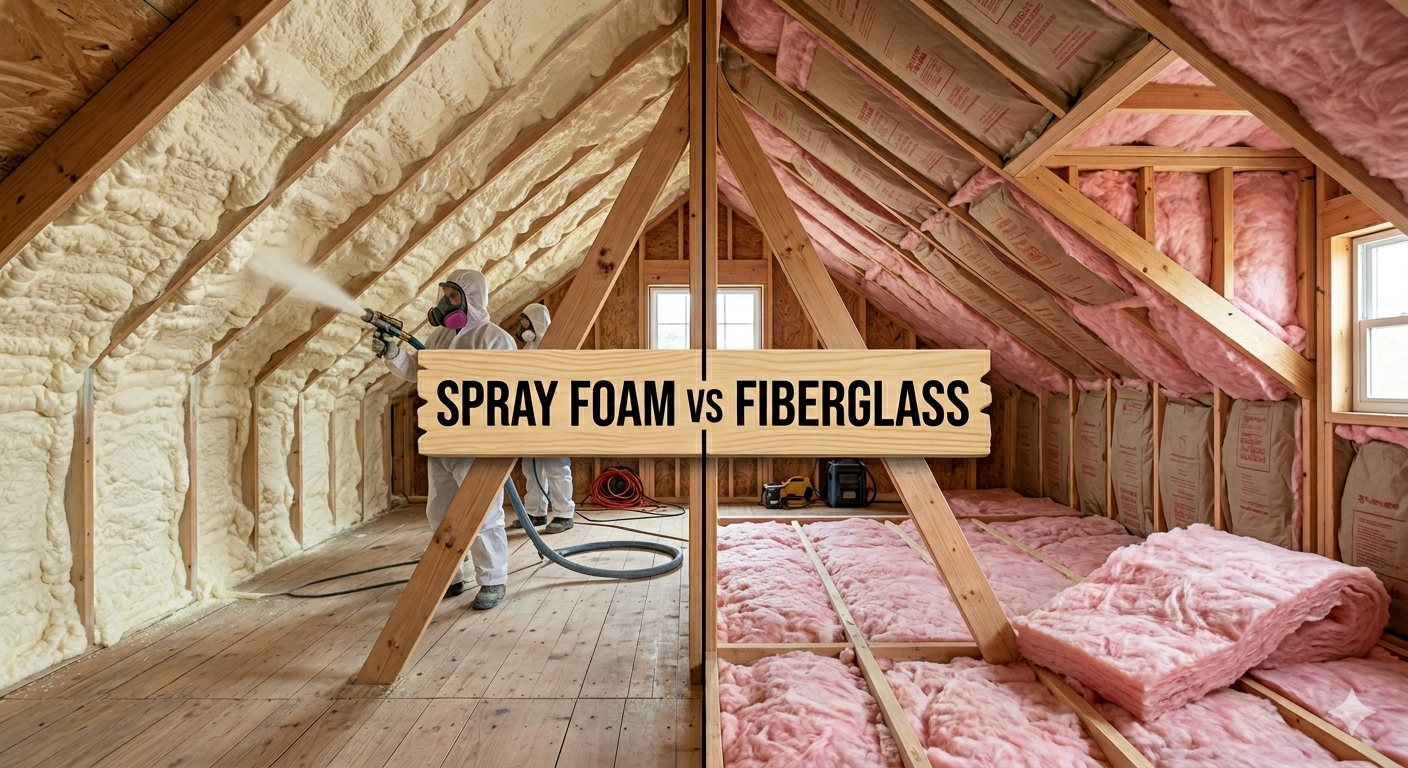
Spray Foam vs Fiberglass: What Are the Real Differences?
When homeowners compare insulation types, the difference comes down to control.
Fiberglass can perform well in dry climates, but in coastal South Carolina, it allows humid air to move freely through walls and crawl spaces.
That’s where problems begin.
Spray foam stops that movement at the source.
Types of Spray Foam: Open Cell vs Closed Cell
There are two primary types of spray foam used in the Lowcountry:
Benefits of Open-Cell Spray Foam
Softer and lighter
Great for sound dampening
Often used in interior walls and attic roof decks
Benefits of Closed-Cell Spray Foam
Denser and more rigid
Higher R-value per inch
Acts as a vapor barrier
Ideal for crawl spaces and moisture-prone areas
In Bluffton and Charleston, closed-cell is often preferred in crawl spaces due to moisture conditions.
How Long Does Spray Foam Insulation Last?
One of the biggest advantages of spray foam is durability.
Unlike traditional insulation materials:
It does not sag
It does not settle
It does not absorb moisture
It does not deteriorate over time
Properly installed spray foam can last the lifetime of the home.
This long-term stability is critical in the Lowcountry, where:
Moisture breaks down traditional materials
Air movement accelerates wear and inefficiency
Spray foam maintains its structure and performance for decades, making it a permanent solution rather than a temporary upgrade.
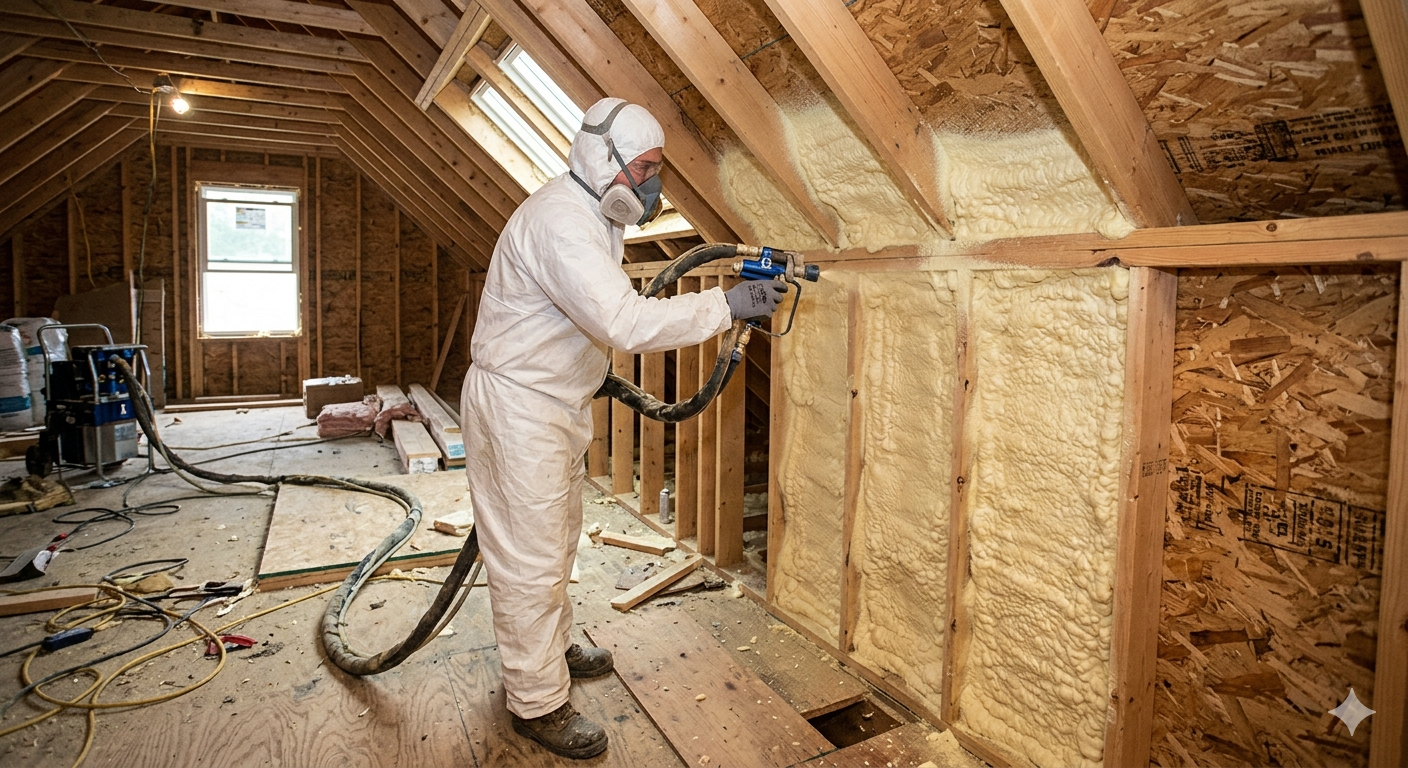
How Does Spray Foam Perform Over Time?
Over the long term, spray foam continues to deliver in three key areas:
1. Moisture Resistance
Spray foam helps prevent condensation inside walls by stopping warm, humid air from reaching cooler surfaces.
This dramatically reduces:
Mold risk
Mildew growth
Structural moisture damage
2. Structural Stability
Closed-cell spray foam adds rigidity to walls and surfaces, improving durability in high-moisture environments.
3. Consistent Effectiveness
Because it does not shift or degrade, spray foam maintains:
Air seal integrity
Insulation performance
Indoor comfort levels
Over time, this consistency is what separates spray foam from fiberglass.
Does Spray Foam Improve Energy Efficiency and Comfort?
Yes and this is where homeowners feel the difference immediately.
Spray foam insulation improves energy efficiency by:
Eliminating air leaks
Reducing HVAC workload
Keeping conditioned air inside the home
Many systems operate more efficiently because they are no longer fighting constant air infiltration.
The result:
More stable indoor temperatures
Fewer hot and cold spots
Lower energy bills
Reduced humidity inside the home
In fact, properly installed spray foam can significantly reduce heating and cooling demands, especially in long cooling seasons like those in South Carolina.
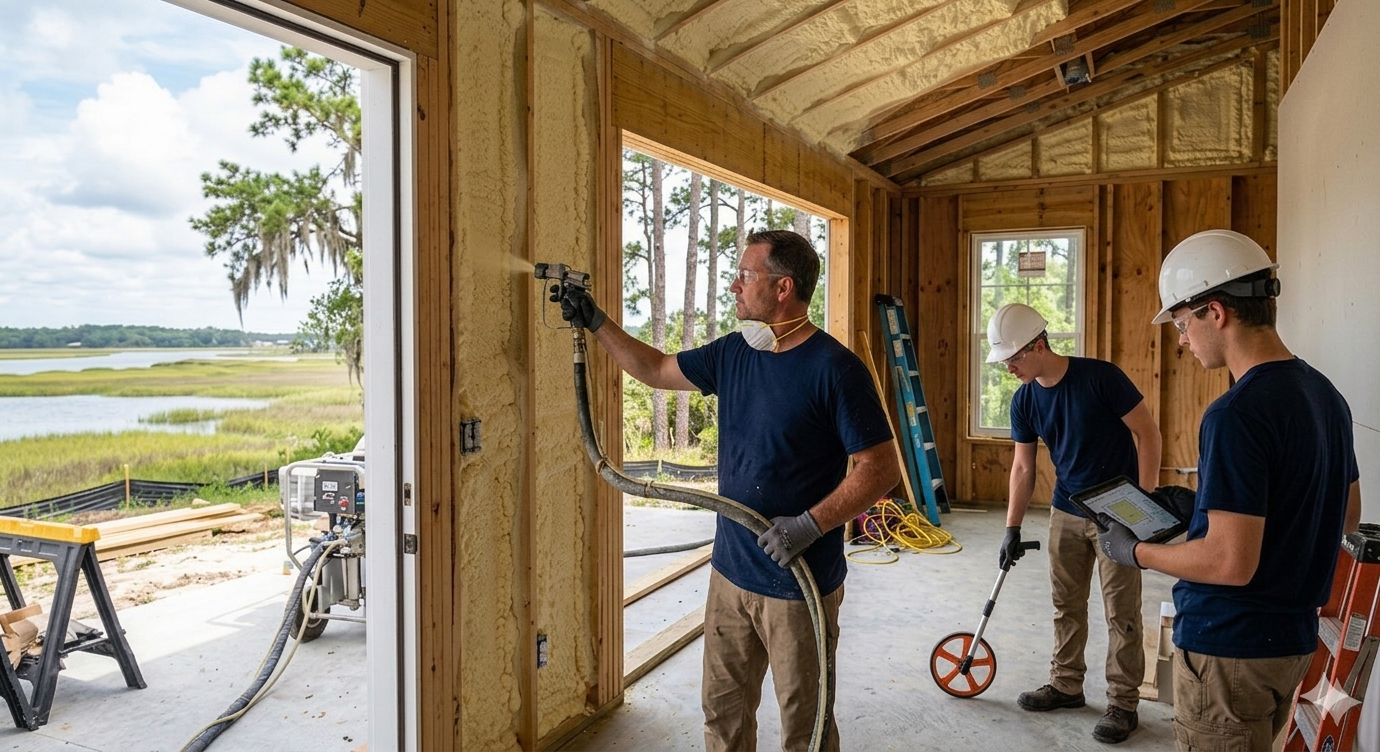
Why Spray Foam Is Ideal for the Lowcountry Climate
Fiberglass may insulate, but it does not stop air movement. In humid climates, that difference is significant.
1. Humidity Control
Humidity is the defining environmental factor in the South Carolina Lowcountry.
Studies from the U.S. Department of Energy show that a significant portion of indoor air can originate from crawl spaces, making moisture control critical in humid climates. If that space is damp, the entire home feels it.
Spray foam:
Reduces air infiltration
Limits moisture migration
Helps prevent condensation within walls
According to the Environmental Protection Agency, controlling moisture is the single most important factor in preventing mold growth inside homes.
2. Air Sealing Performance
According to ENERGY STAR, traditional insulation like fiberglass does not stop air leakage, which is a major source of energy loss and moisture intrusion and building science experts such as Dr. Joseph Lstiburek emphasize that air movement is the primary driver of moisture problems in homes.
Spray foam seals:
Cracks
Gaps
Voids
Wall cavities
In humid regions like Bluffton and Charleston, uncontrolled air movement is what drives moisture problems inside walls and attics.
3. Mold and Mildew Resistance
Industry guidance from the Spray Polyurethane Foam Alliance notes that spray foam insulation does not provide a food source for mold, unlike some traditional materials.
By preventing condensation inside wall cavities and crawl spaces, spray foam significantly reduces mold growth risk; a major concern in coastal homes.
4. Energy Efficiency in Long Cooling Seasons
Lowcountry summers are long and humid.
According to the U.S. DOE spray foam insulation can reduce heating and cooling costs by up to 50% when properly installed .
By sealing the building envelope:
HVAC systems work less
Indoor temperatures stabilize
Energy bills decrease
In Bluffton and Charleston, cooling demand often exceeds heating demand, making proper attic and roof deck insulation especially important.
How Much Does Spray Foam Insulation Cost in Bluffton and Charleston?
Cost depends on several factors, including:
Open cell vs closed cell
Square footage
Thickness required
Removal of old insulation
Accessibility
Moisture remediation needs
Typical Lowcountry Cost Ranges
While pricing varies, homeowners can expect:
Open cell: lower per square foot
Closed cell: higher per square foot
Crawl space encapsulation: priced per project scope
New construction: typically more cost-efficient per square foot than retrofit
Bluffton and Charleston homes may require additional moisture mitigation measures due to:
High water tables
Vented crawl spaces
Elevated foundations
Every project requires a site evaluation to provide accurate pricing.
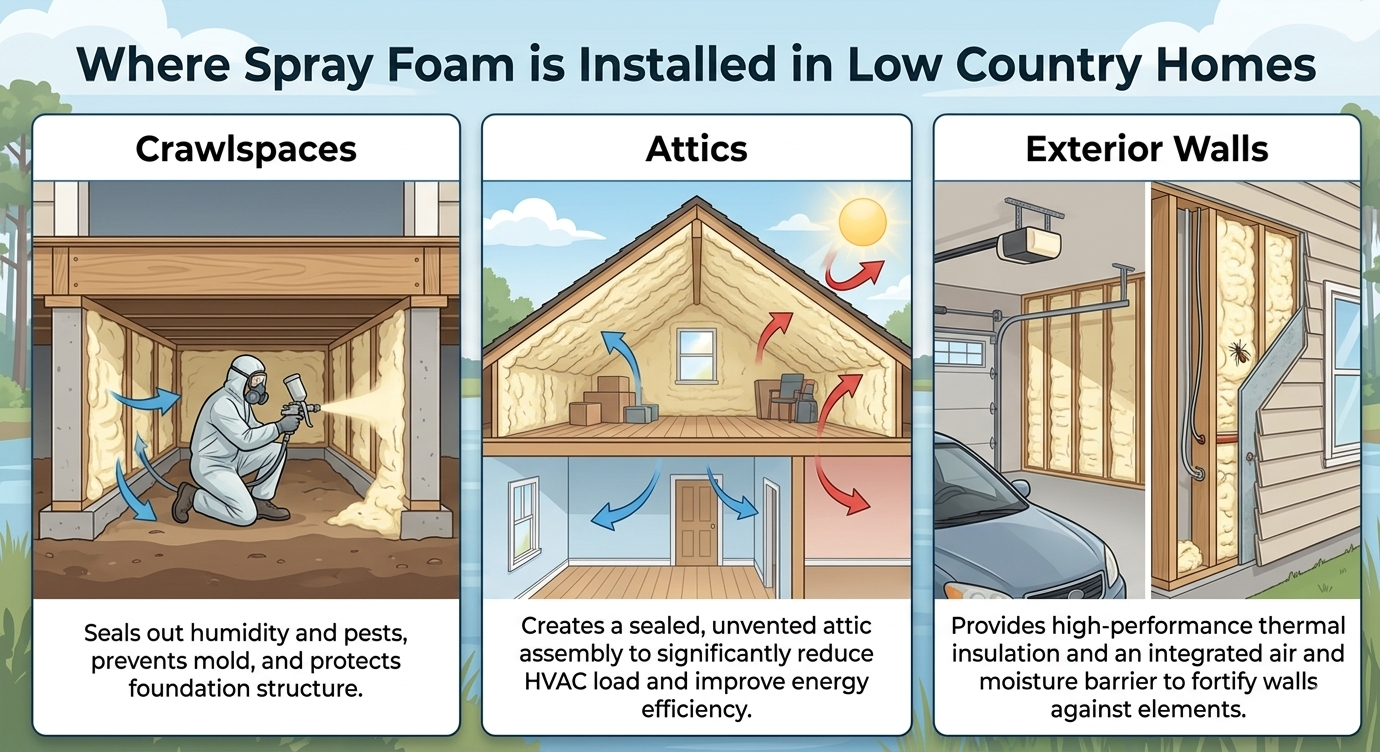
Where Spray Foam Is Installed in Lowcountry Homes
1. Crawl Spaces
Crawl spaces in the Lowcountry are often:
Damp
Vented
Exposed to soil vapor
Spray foam paired with vapor barriers and drainage systems helps:
Reduce musty odors
Improve indoor air quality
Stabilize temperature and humidity
2. Attics and Roof Decks
Attic temperatures in South Carolina can exceed 130–150 degrees.
Spray foam applied to the roof deck:
Creates a conditioned attic
Reduces HVAC strain
Improves comfort in upper floors
3. Exterior Walls (New Construction)
For builders in Bluffton and Charleston, spray foam:
Improves energy performance
Reduces callbacks
Enhances moisture control
It is installed at the same construction stage as traditional insulation .
4. Commercial and Agricultural Buildings
Spray foam helps:
Maintain consistent temperature and humidity
Reduce corrosion
Extend mechanical lifespan
Improve inventory stability
Humidity control is often the top concern for Lowcountry facility managers.
What to Expect During Spray Foam Installation
Step 1: Consultation and Evaluation
Moisture assessment
Project scope planning
Recommendation of open vs closed cell
Step 2: Site Preparation
Protect fixtures
Remove old insulation if necessary
Prepare surfaces
Step 3: Application
Two components mix at the spray gun
Material expands and adheres
Thickness carefully controlled
Step 4: Curing and Ventilation
Temporary ventilation required
Re-entry timeline explained beforehand
Professional installation ensures proper performance and safety.
Signs Your Lowcountry Home May Need Spray Foam
Persistent indoor humidity
Musty odors
High energy bills
Uneven temperatures
Visible crawl space moisture
Condensation in attic
Homes in Bluffton, Beaufort, and Charleston often experience these symptoms due to moisture infiltration.
Is Spray Foam Worth It in the Lowcountry?
In many cases, yes.
Spray foam delivers:
Lower energy bills
Improved indoor air quality
Reduced mold risk
Enhanced comfort
Long-term durability
Unlike insulation materials that sag or deteriorate, spray foam does not settle over time .
In coastal South Carolina, durability and moisture resistance significantly increase long-term value.

Choosing a Spray Foam Contractor in Bluffton or Charleston
When evaluating contractors, look for:
Experience in humid coastal climates
Knowledge of crawl space moisture issues
Transparent pricing
Proper licensing and insurance
Atlantic Spray Foam has served the South Carolina Lowcountry for over 21 years , providing insulation solutions designed specifically for:
Bluffton
Hardeeville
Ridgeland
Beaufort
Fripp Island
Lady’s Island
Edisto
Charleston
Summerville
Goose Creek
Schedule Your Free Consultation
Atlantic Spray Foam
2050 Old Baileys Road, Unit 10
Ridgeland, SC 299365718 Hwy 165
Ravenel, SC 29470Call: 843-707-4066
If you’re searching for spray foam insulation in Bluffton SC or Charleston SC, we’re ready to help you evaluate your home and recommend the right solution.
Your home faces Lowcountry humidity every day.
Make sure your insulation is designed for it.
References
https://www.energy.gov/energysaver/types-insulation#sprayedfoam
https://www.energy.gov/energysaver/adding-insulation-existing-home